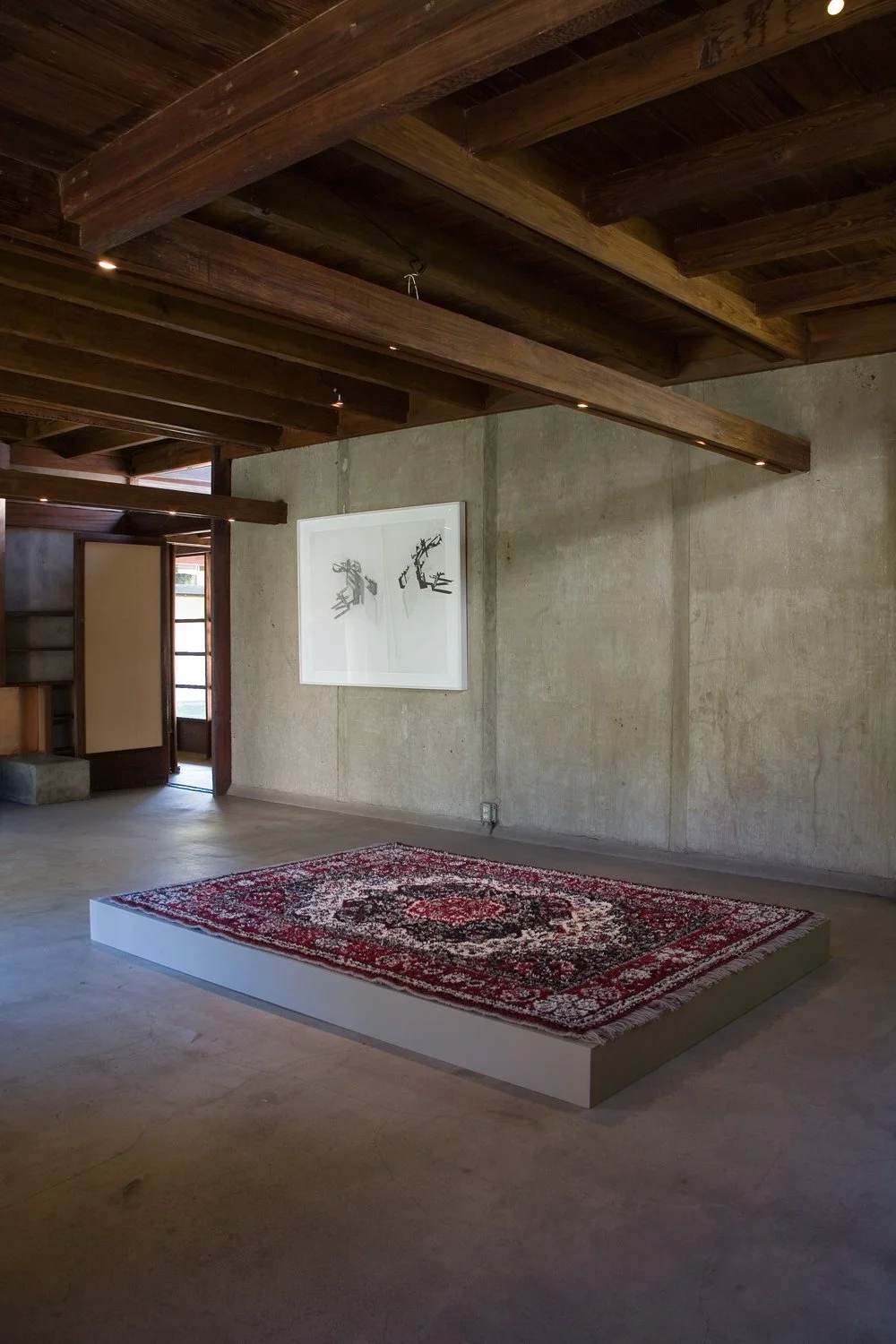
Installation view of Symmetry. Photography by Joshua White, 2006.
In the world of space and time, symmetry derives its meaning from a center, a repetition of forms on mirroring sides of an axis. The exhibition Symmetry features works by Los Angeles-based contemporary artists that use or relate to this concept. Curated by Nizan Shaked and Kimberli Meyer, Symmetry presents work by nine artists: Edgar Arcenaux, Patrick Hill, Brandon Lattu, Sandeep Mukherjee, Amy Sarkisian, Eddo Stern, Jessica Hutchins, Stephanie Taylor, and Sam Watters.
Symmetry describes a formal property; it also has been continuously associated with an ideological position. In ancient Greece, symmetry was seen as key to creating balance, order and beauty. Modernism, posited as the antithesis to the persistence of classicism, deemed symmetry a redundant form that facilitated idle viewing. Attached to neither of these positions, the exhibition artworks underscore and often directly respond to the unique symmetry of the Schindler House. Like the house, the works perform a spin on the idea of balance, the use of symmetry — or its careful undoing — appearing sometimes on the surface, sometimes hidden in the structure, but always at the core of a work’s meaning.
The Schindler House’s symmetry can only be perceived by experiencing its space, reading its floor plan, or from a bird’s eye view, for it is not apparent in a facade. Conceptualized on the horizontal rather than the vertical plane, the pin-wheel floor plan revolves around a central axis, creating a flipped symmetry that enabled two families to share the same home with maximum privacy. Schindler’s use of interlocking spaces and the resulting multi-planar vistas and transparencies further extends the sensation of spaciousness in this utopian experiment in Modern living. The properties of the house, the history of its residents, and the exhibition it will host, all reveal subtle formal symmetries that spin narratives of similarity and difference.
EDGAR ARCENEAUX
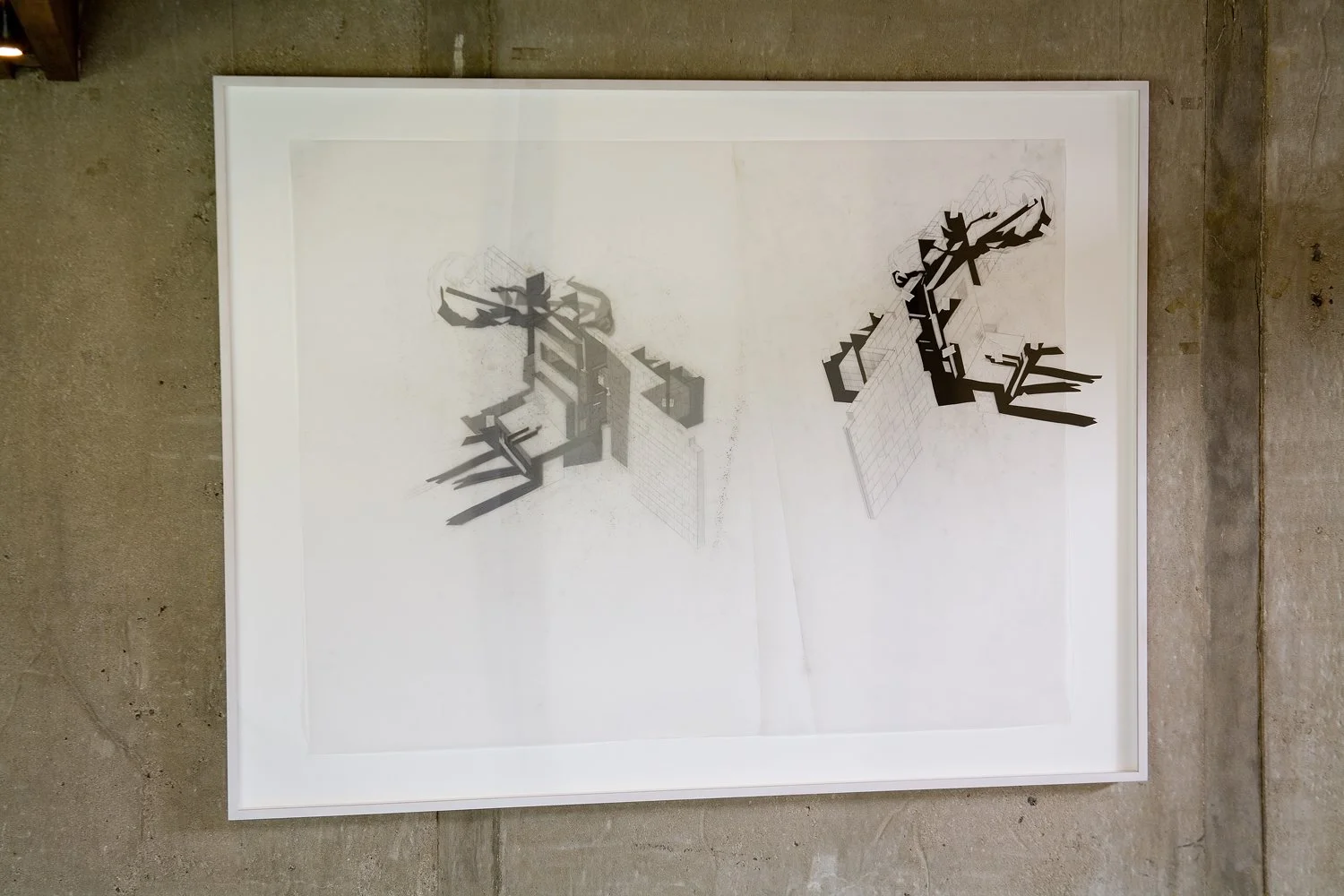
On both sides of a diagonal axis created by folding a vellum surface, Arceneaux renders an accident or a collision between a vehicle and an edifice. Yet instead of a wreck, we see a drawing of a bizarre hybrid form and its rotated mirrored image. A composite of machine and urban landscape, the crash emanates a distopic atmosphere. Drawn on both sides of the translucent paper, the image on the top is more lucid than its corresponding counterpart. A collage of construction paper shadows parts of the rendered image on each side, creating a play between the opaque and varying degrees of transparencies. This mirroring of images further reveals impossible vistas and illogical elevations.
PATRICK HILL
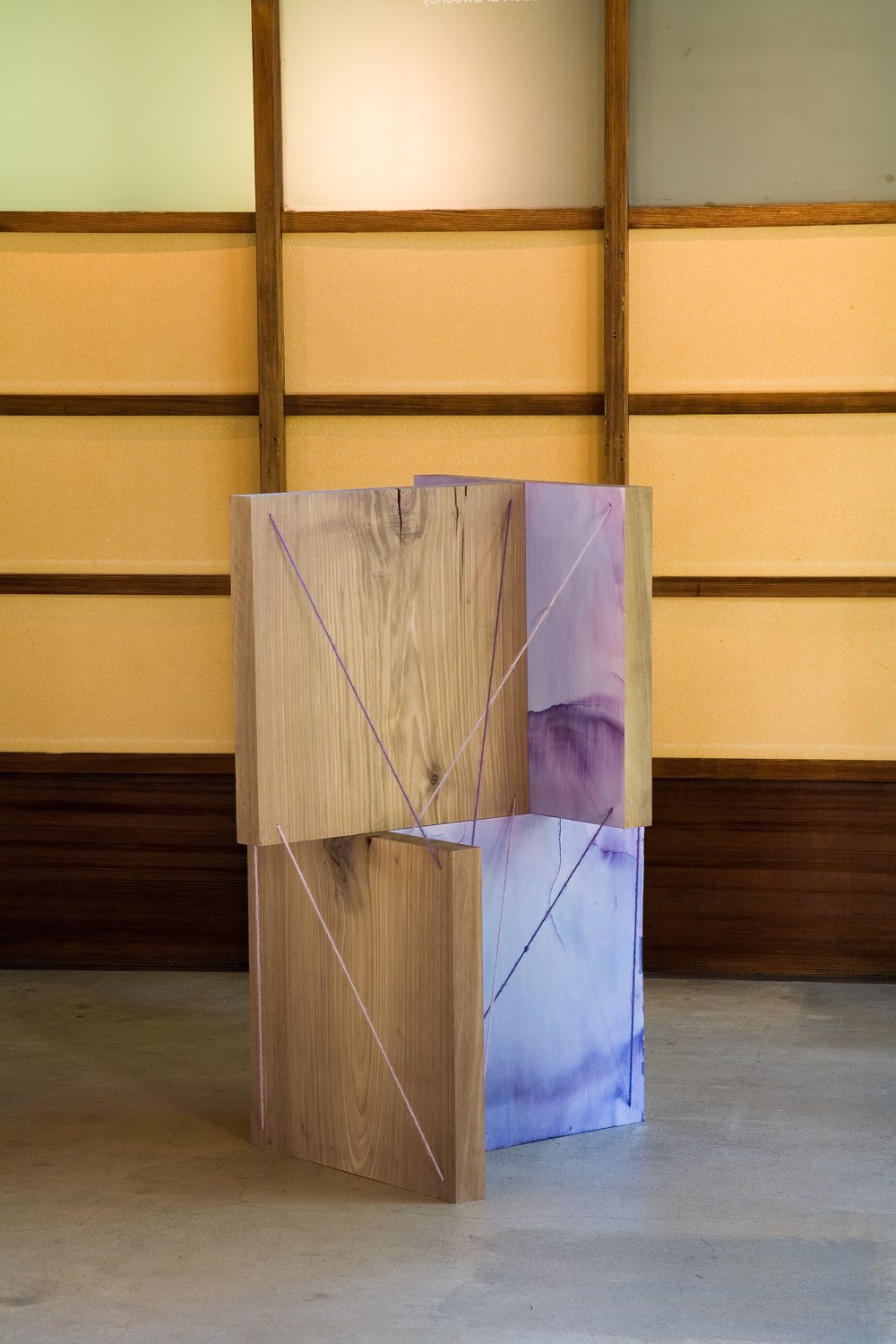
In dialogue with the legacies of American formalism, Patrick Hill’s artwork collapses the distinction between abstraction and allegorical narrative. Precariously balanced fragile materials that may initially read as formal exercises are in fact loaded with references to overarching themes, such as the fragility of human life. The sculpture Deja Vu reminds us that the human impulse to memorialize can exist anywhere on the scale between monumental and miniature. Evoking both a model for an edifice and a personal altar, Deja Vu connects “high” practices of art and architecture to folkloric impulses for material commemoration, linking aesthetics to memory. Like the Schindler House, the sculpture bleeds the distinctions between inside and outside. The play between its surfaces and the three-dimensional space created by intersecting planes activates the viewer to look for symmetry in the sculpture.
SANDEEP MUKHERJEE
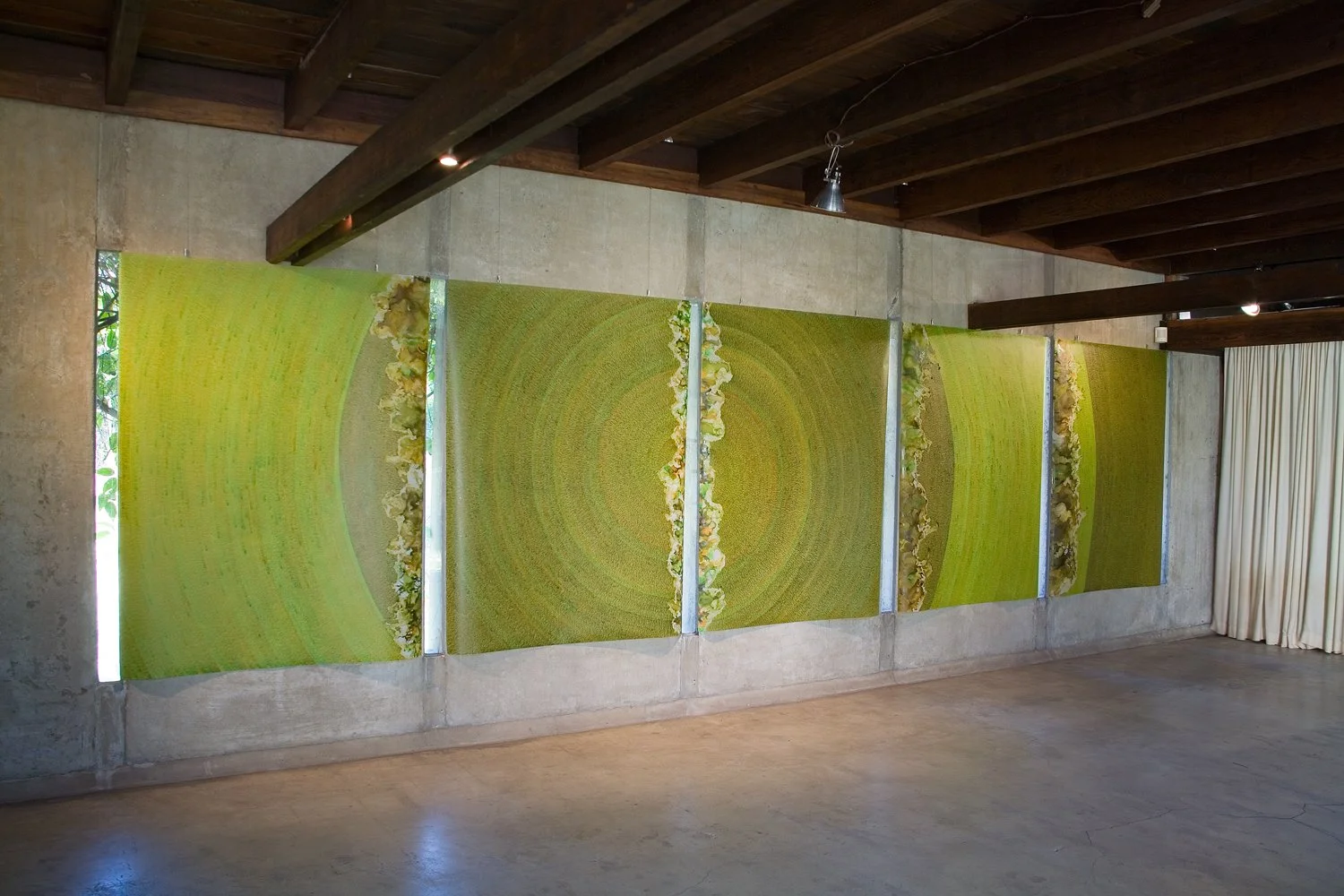
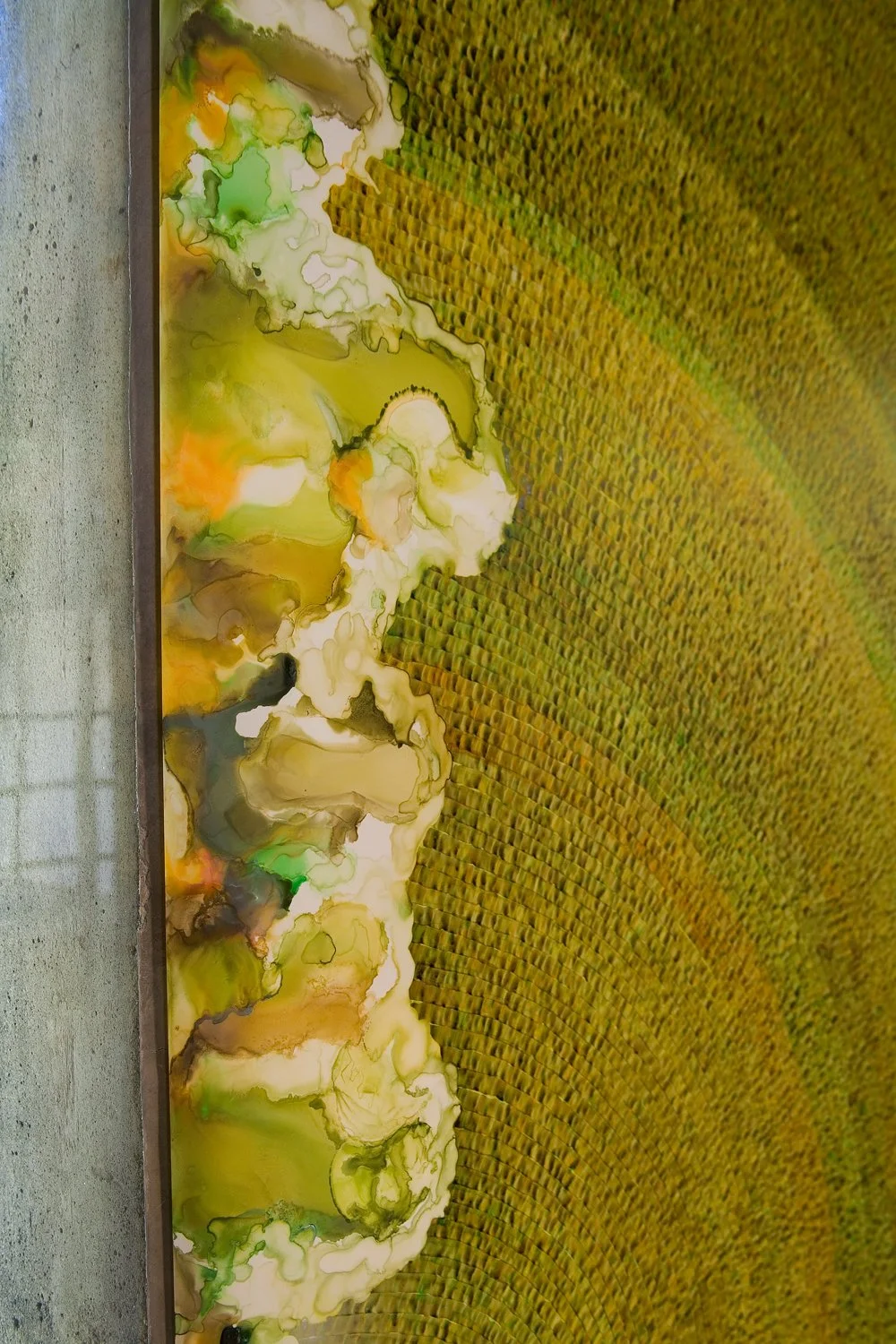
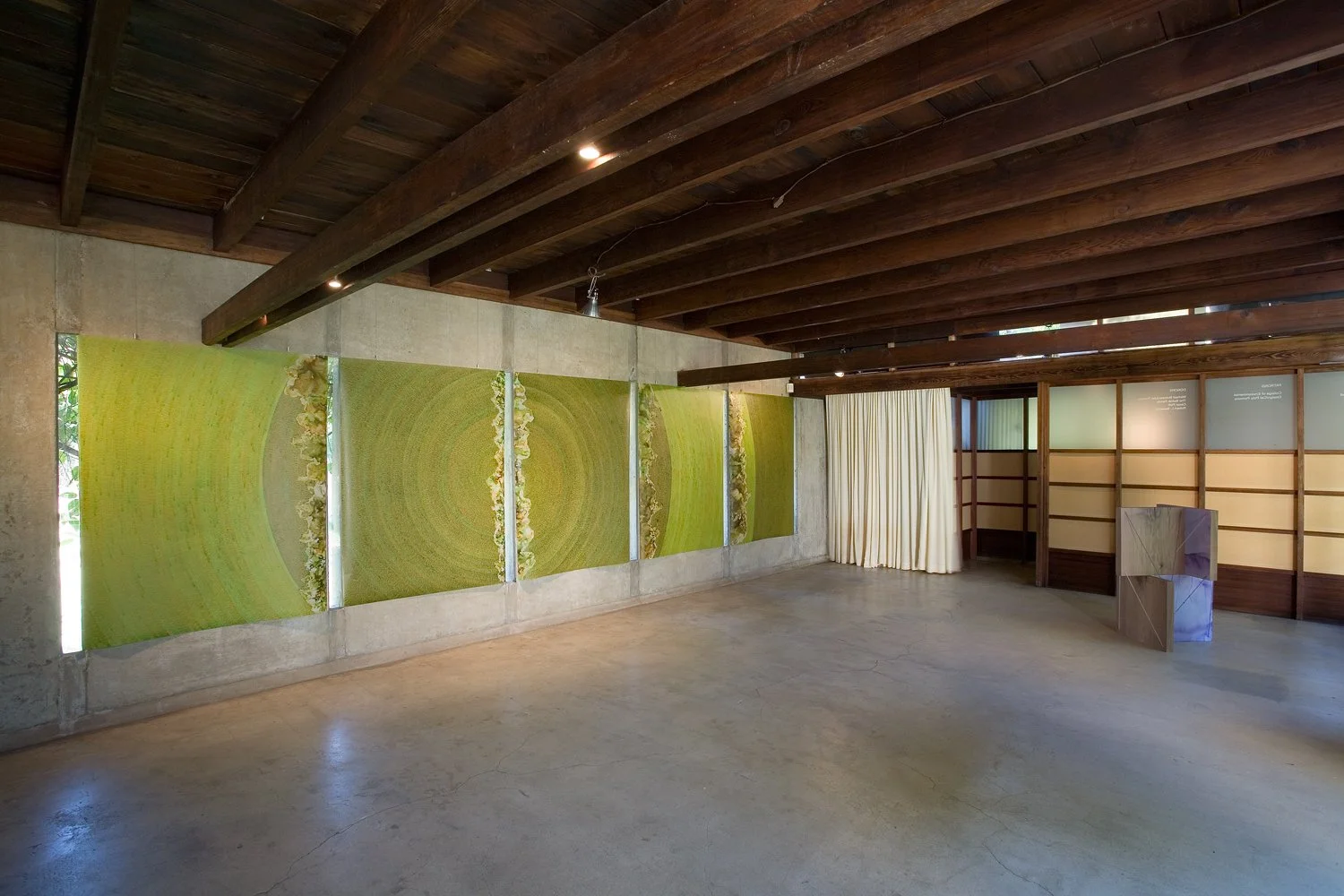
Mukherjee’s drawings make visible systems of order that are known to us through science and art, especially the use of horizon lines and vanishing point perspective in the representation of three-dimensional reality. In both his figurative and abstract works, he consciously activates the viewer’s physical presence by creating a tension between pictorial and sculptural space. For Symmetry, Mukherjee will create new work that will incorporate the narrow windows of the Pauline Schindler Studio and engage both the space inside and the landscape around the building.
AMY SARKISIAN
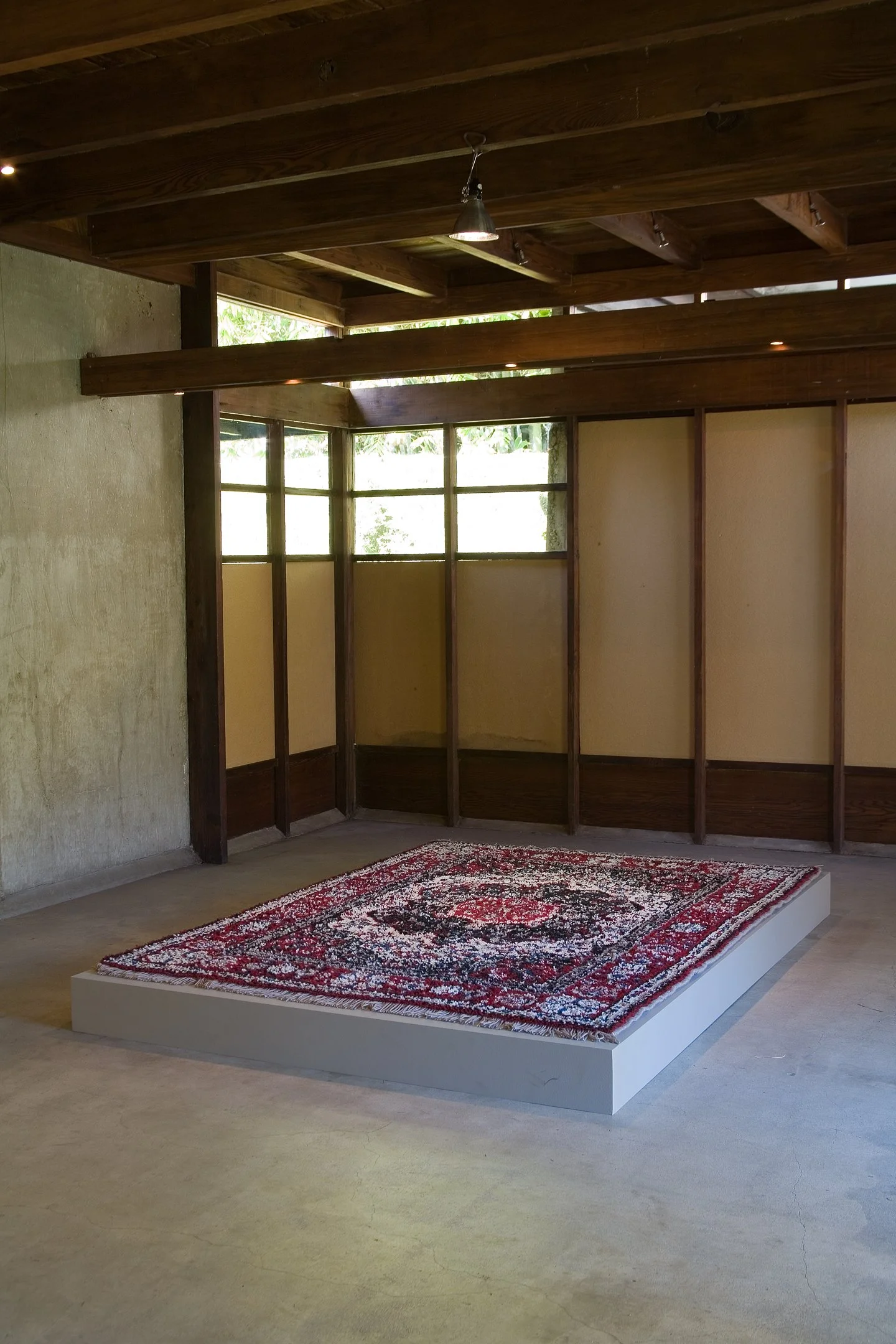
Spectacularly made from craft materials, Sarkisian’s sculpture is a pop/glam/goth intervention into the seriousness of art production, emphasizing the macabre dimension of human creativity. Using carnivalesque patterning and meticulous ornamentation, Sarkisian’s ironic objects question the relation between style and value. For Symmetry, Sarkisian will display an Oriental rug with its detail omitted—creating an out-of-focus, disorienting visual. The density of an Oriental rug, commonly a measure of its quality, is diluted. Thus, the symmetrical pattern is reduced to its stylistic properties, questioning Western systems of connoisseurship. Recalling the domestic context of the house, the rug also winks at High Modernism’s refined taste for Oriental decor. Additionally, Sarkisian will exhibit new work that responds to the Schindler House’s history of colorful guests, patrons and ghosts.
EDDO STERN AND JESSICA HUTCHINS
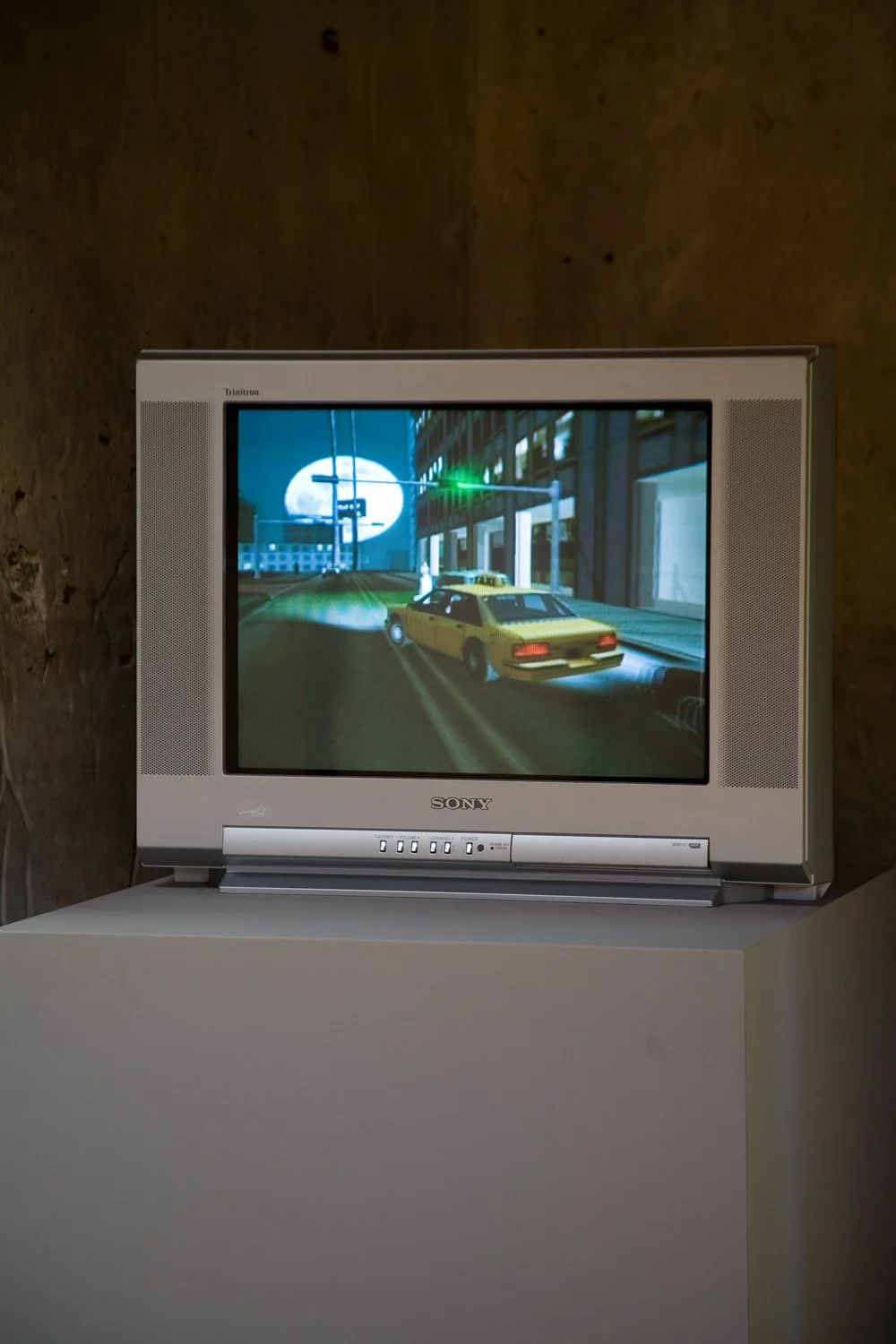
Eddo Stern’s computer sculptures make up a techno/neo-medieval landscape built around the functional hardware elements of a computer desktop environment: keyboard, mouse, monitor, tower, etc. Forms are derived from the sub-cultures of custom computer case modifications, hardware hacking, computer game modification and sampling. For Symmetry, Stern will collaborate with Jessica Hutchins on a site-specific installation of an interactive computer game. The installation will connect the Clyde Chase and Rudolph Schindler studios, located at the far edges of the house. Demanding the participation of two viewers to complete the work, it will also be intelligible when observed without activation. The difference between observation and participation marks the shift between the solitary and the social, echoing the utopian philosophy of the Schindler house and the relation between its particular form of symmetry and its social agenda.
SAM WATTERS
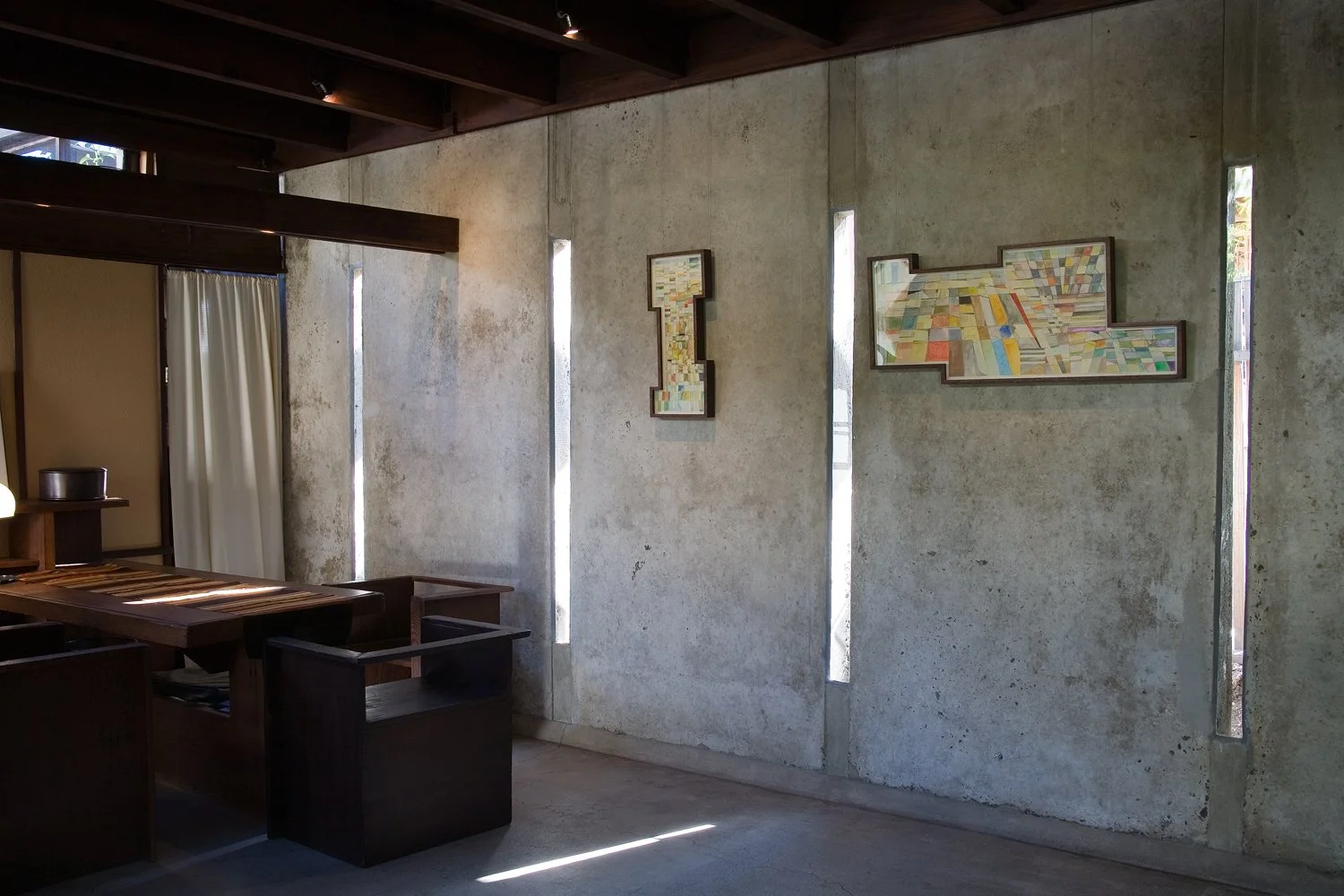
Sam Watters’ drawings may be viewed through the legacy of conceptual art. With sly and sophisticated humor, he utilizes technical drawing conventions to disrupt existing paradigms by rereading them through the vocabulary of art, and visa versa. For Symmetry, Watters examines the equilibrium between Schindler and Neutra, professional partners and one-time housemates who fell-out over the commission of two houses for Dr. Lovell, only to meet again decades later as they lay side by side in hospital beds on the eve of Schindler’s death. Watters juxtaposes the footprint of the Lovell Health House (Neutra) and the Lovell Beach House (Schindler), with shaped frames rendering scaled silhouettes of the original floor plans. Both object and picture, the work is a love child of an architectural floor plan and the Modernist quest for the autonomous art object. Exhibited in the Rudolph Schindler studio, the only room displaying original furniture, the work camouflages itself as mere drawings hung on the wall, the oddity of the shaped frames striking a moment later.
STEPHANIE TAYLOR
At the heart of Stephanie Taylor’s artistic production is a set of mirroring texts associated by rhyme. Pivoting around an intricate process of phonetic translation, the texts are aurally symmetrical, but not in terms of their literal meaning. In her work process, Taylor eliminates the consonants from a story or poem, distilling it into vowel sounds only. The bare vowel-story is then dressed from an inventory of words that rhyme with the vowel-words, creating a new syntax. Sounding ”like” English, this echo of a text flows in and out of denotation in an arbitrary rhythm that “resembles” meaning. Sculpture and graphic works are then developed from the reflected text. In Symmetry, Taylor will exhibit one component of a larger installation entitled Chop Shop, a show about an auto-theft gang in Los Angeles, on view at the University of California, Irvine’s Room Gallery from January 19 - February 16th, 2006. The work at the Schindler House will consist of a car stereo playing a musical rendition of the mirrored text, echoing the folk song Riding in My Car by Woody Guthrie.
BRANDON LATTU
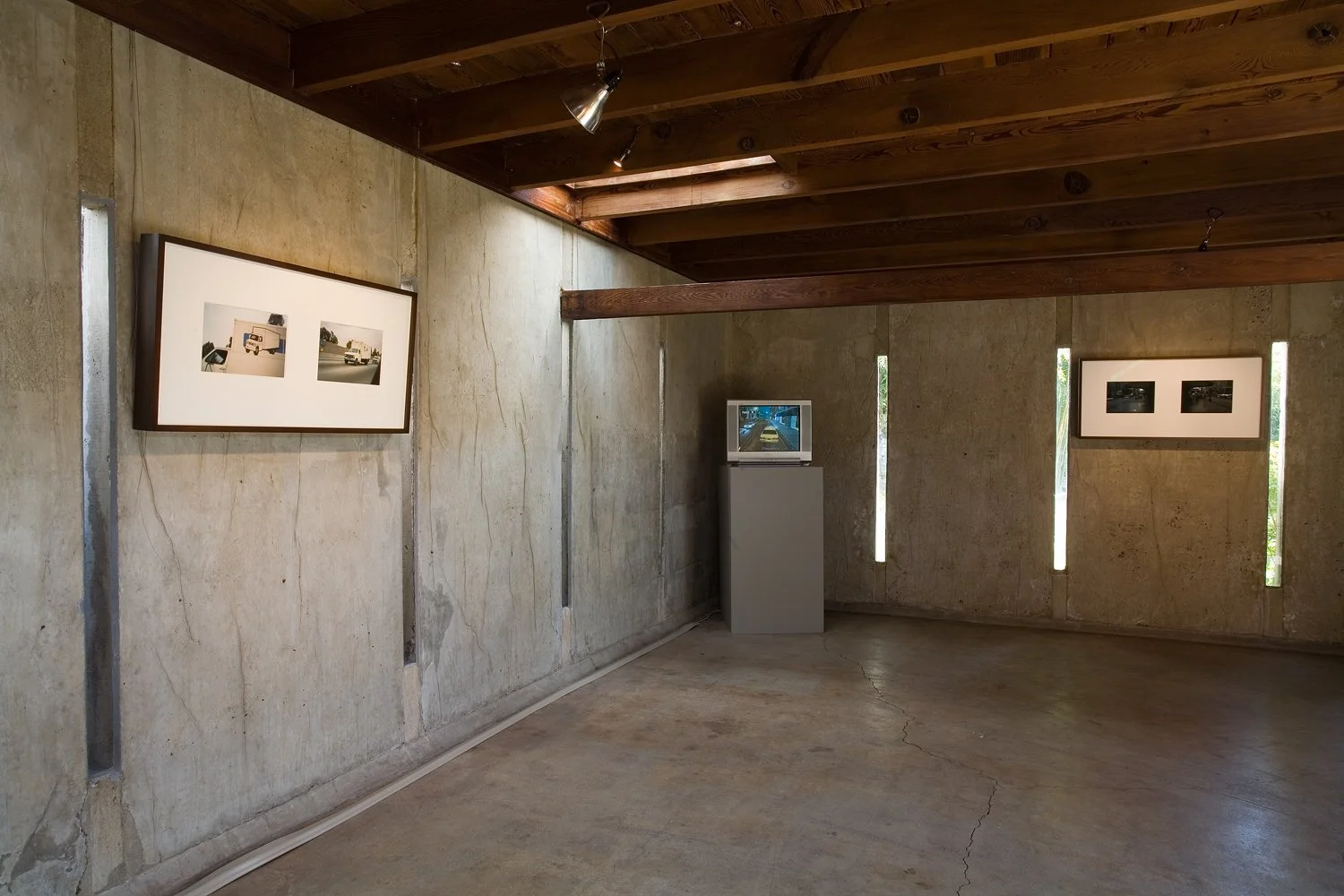
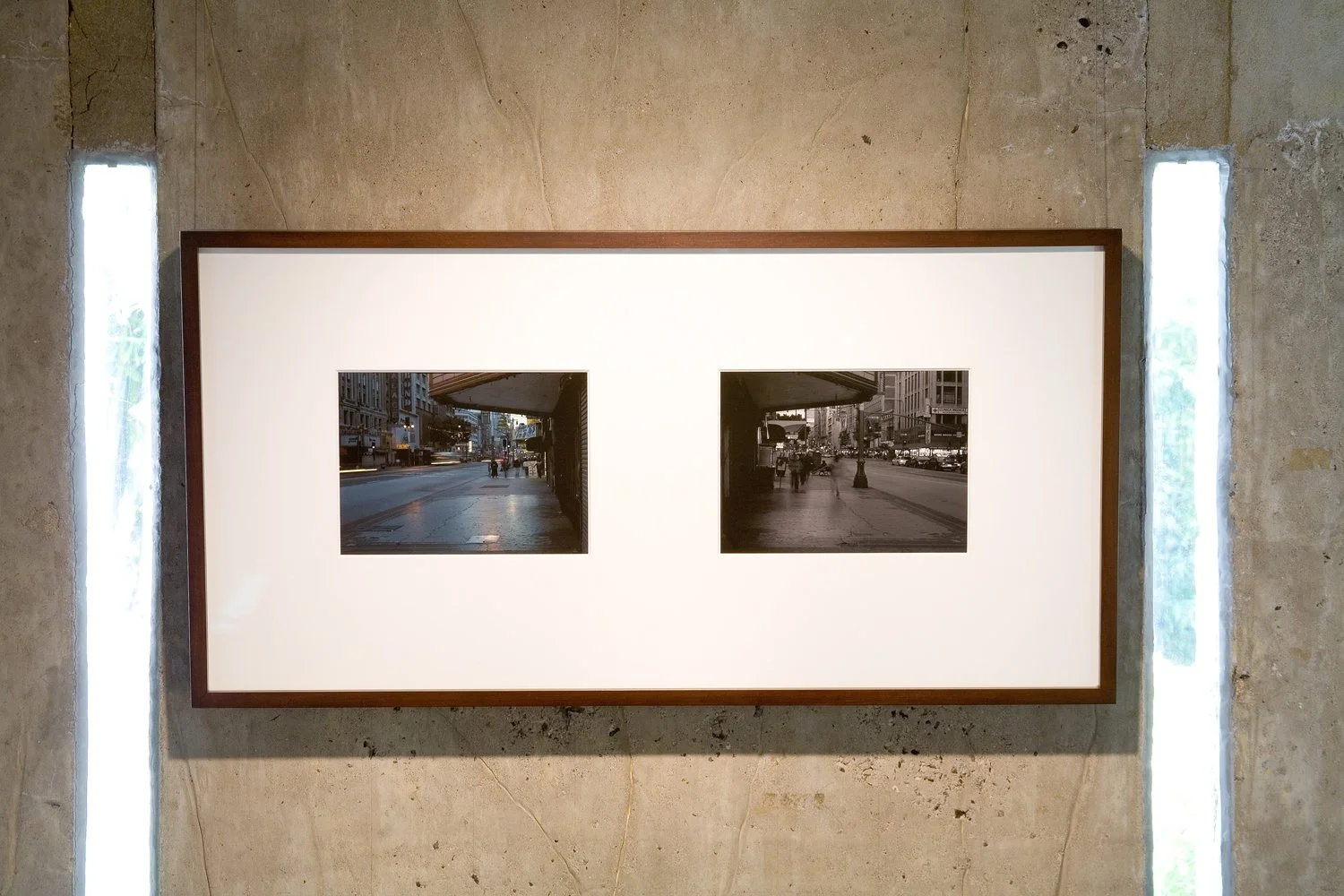
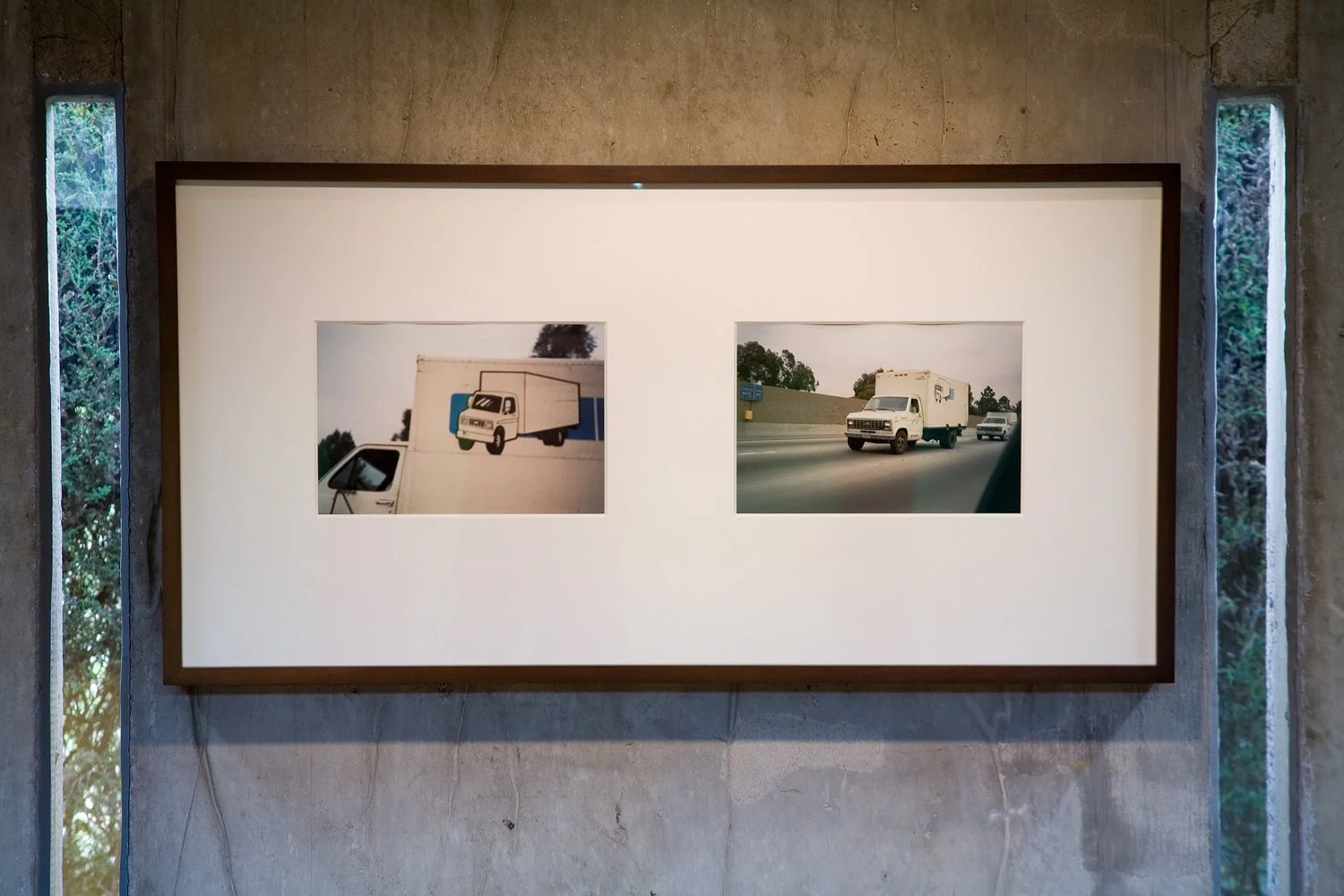
Brandon Lattu explores perception by focusing the camera on the contemporary environment—streetscapes, city views, homes—both interior and exterior, and always from an unexpected physical, psychological and philosophical angle. In images that subvert the process of looking, he presents billboards, signage, buildings, consumer products and landscapes, seen inside out, from reverse, above and below, in section, transparent, etc. Digital manipulation is sometimes employed to adjust the process of time. At the Schindler House, Lattu will show work from a series of stereo pairs. These pairs of photographs take as a departure point an old-fashioned technology of making two almost identical photographs look like one three-dimensional image.