
Alumni
Filter by Discipline
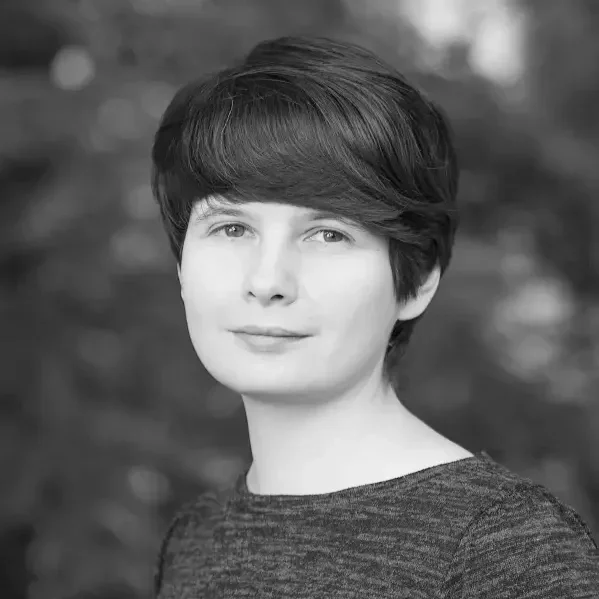
Anastasiya Yarovenko
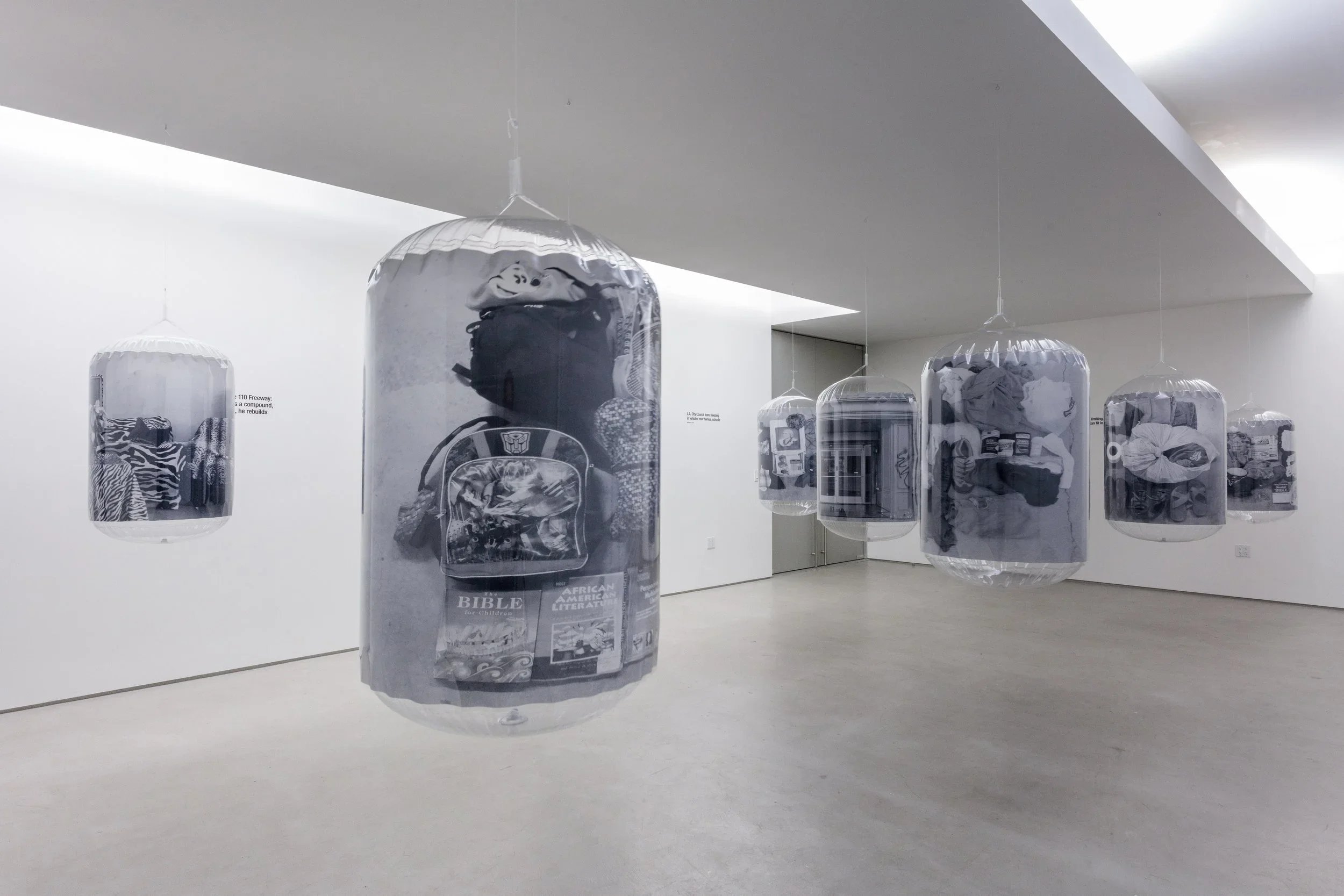
Anastasiya Yarovenko (*1983, UA/AT) lives and works in Vienna. Studied at the Academy of Fine Arts Vienna (2015) and holds an MA in Theory of Literature and Comparative Studies (2006). Anastasiya has received several prizes and grants such as Prize of the Kunsthalle Wien, START scholarship of the Federal Ministry for Culture of Austria and she is also a recipient of the MAK Schindler Scholarship Program (USA). Yarovenko participated in School of Kyiv - Kyiv Biennial (UA) in 2015 and other international biennial. Her work has been presented at international exhibitions such as Lentos Kunstmuseum (AT), xhibit (AT), Köttinspektionen Uppsala (SE), Sculpture Park in Vienna MQ (AT), Württembergischer Kunstverein Stuttgart (DE), Mackey Apartments, Los Angeles (USA), Kunsthalle Wien (AT), Odessa Museum of Western and Oriental Art (UA), Nest (NL) and others. Anastasiya was a Guest Professor of the Experimental Art Class at the Art University Linz in 2023/2024.
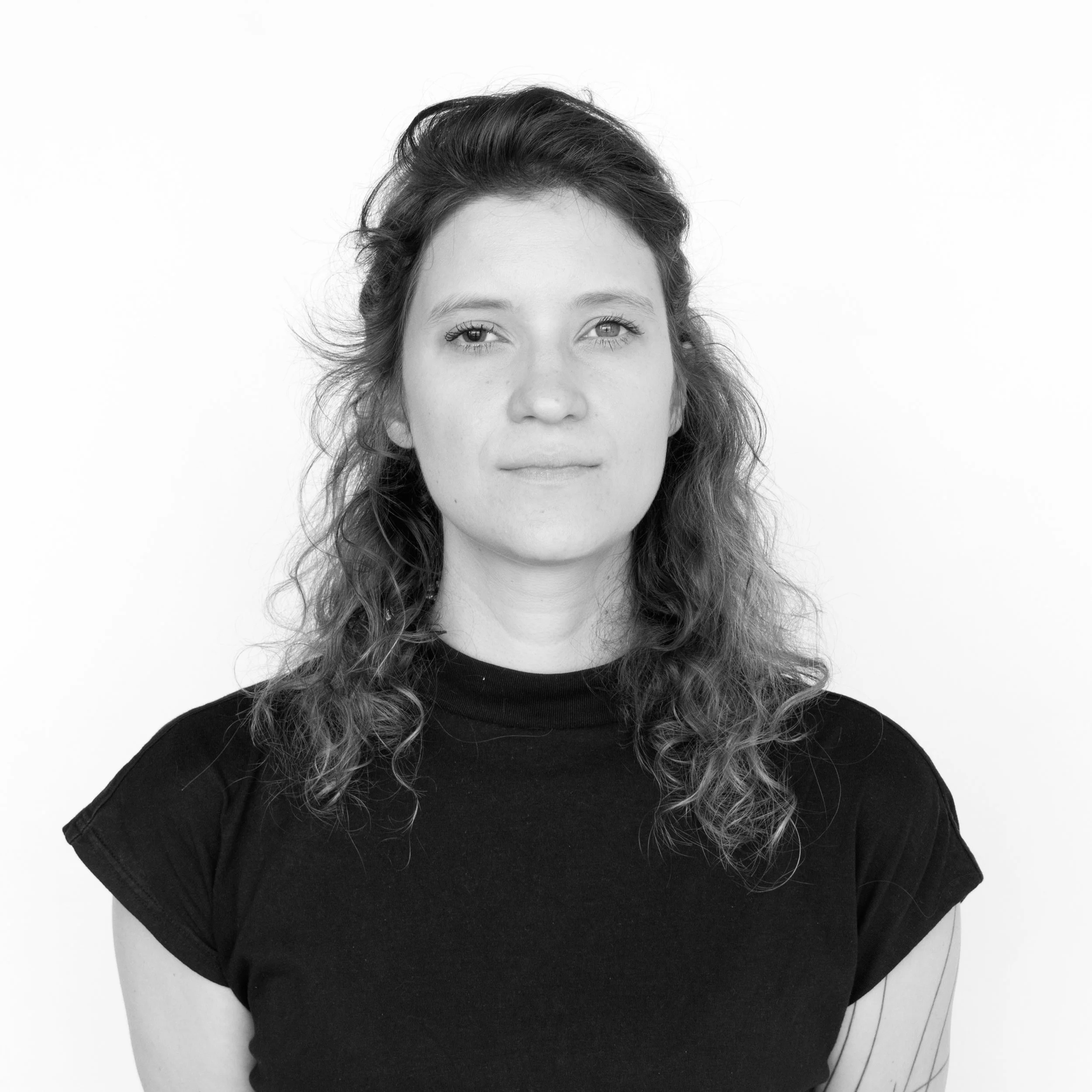
Nico King
Nicole Theresa King is an interdisciplinary artist, designer, and researcher whose practice bridges modern landscape history, design speculation, and materialist ecological thought. Her current work examines the environmental aesthetics and crisis imaginaries of Southern California in the twentieth century. The research asks how horticultural design, leisure infrastructures, and colonial ecologies produced a modernist paradigm that fused image and infrastructure into environmental imaginaries. It examines how these forms unravel the politics of nature in the Anthropocene amid contemporary ecological distress.
Nico’s work challenges landscape as medium, material, and infrastructure. Trained in art- and design-based research, Nico holds an MLA/M.Sc. in Landscape Architecture from BOKU Vienna (2012, with distinction of excellence), where her thesis examined Johannesburg’s post-industrial gold mine dumps as novel urban infrastructures, tracing their material and symbolic toxic legacy within apartheid urbanisms and conceptualizations of nature. A second master’s thesis at the Academy of Fine Arts Vienna (MA 2012, with distinction of excellence) investigated the spatial politics of Shoah memory in post-Nazi Austria in comparison to Israel. Whereas postwar Austria reconstituted itself as victimized nation despite its role as perpetrator, Israel emerged as survivor state. This contrast provided a lens for analyzing how the presence and absence of evidence shapes public monuments and materialities of memory.
She is currently completing her PhD in Art History, Theory, and Criticism with a concentration in Art Practice at UC San Diego, with a parenthetical degree in the study of human origins. Prior to arriving in San Diego, she received the START Award for Young Architects and Designers from the Austrian Federal Chancellery (2017-18). Her residencies include SOMA Mexico (2019) and the MAK Center for Art and Architecture in Los Angeles (2016-17). Nico was an ifk Junior Fellow at the International Research Center for Cultural Studies in Vienna at the University for Art and Design Linz (2025; 2025-26). She was a Wilbur R. Jacobs Fellow and a Mellon Fellow at The Huntington Library, Art Museum, and Botanical Gardens in San Marino, California (2023–24) and the recipient of a Kate Neal Kinley Memorial Fellowship in Landscape Architecture from the Department of Fine + Applied Arts, University of Illinois at Urbana–Champaign (2020-21). In 2025-26, Nico is a guest scholar at Humboldt University Berlin’s Cluster of Excellence "Matters of Activity: Image. Space. Material." as well as the Rachel Carson Center for Environment and Society at Munich University.
Publications include articles and book chapters on post-industrial mining landscapes (jovis, 2014; IUAV, 2012), crisis technologies in Southern California gardens (ifk now, 2025), the culture industry of horticulture (Metroverlag, 2014), and parks as monuments, social design ideals, and political ground (Callwey, 2015; Edward Elgar, 2018; Stadt+Grün, 2018).
Petrit Halilaj
Petrit Halilaj understands exhibitions as a way to alter the course of personal and collective histories, creating complex worlds that claim space for freedom, desire, intimacy, and identity. His work is deeply connected to the recent history of his native country Kosovo and the consequences of cultural and political tensions in the region, which he often takes as a starting point for igniting countercurrent poetics for the future. Rooted in his biography, the projects encompass a variety of media, including sculpture, drawing, text, and performance. Often incorporating materials from Kosovo and manifesting as ambitious spatial installations, his work transposes personal relationships, places and people into sculptural forms. Halilaj’s work can be seen as a playful and, at times, irreverent attempt to resist oppressive politics and social norms towards an untamed celebration of all forms of connectedness and freedom.
In 2013, Halilaj represented Kosovo for the country’s first appearance at the Venice Biennale. In 2017, he was invited to participate in the 57th Venice Biennale by the curator Christine Macel, where he was awarded Special Mention by the Jury. That same year, he was awarded the Mario Merz Prize, which resulted in a major commissioned project he presented in 2018 at the Zentrum Paul Klee, Bern and at Fondazione Merz, Turin, Italy. He also received the Kunstpreis Berlin granted by the Akademie der Künste, Berlin (2023). He is member of the Akademie der Künste der Welt from Cologne, Germany. He is currently a professor at the Ecole Nationale Supérieure des Beaux Arts de Paris, France, where he shares his class with Alvaro Urbano.
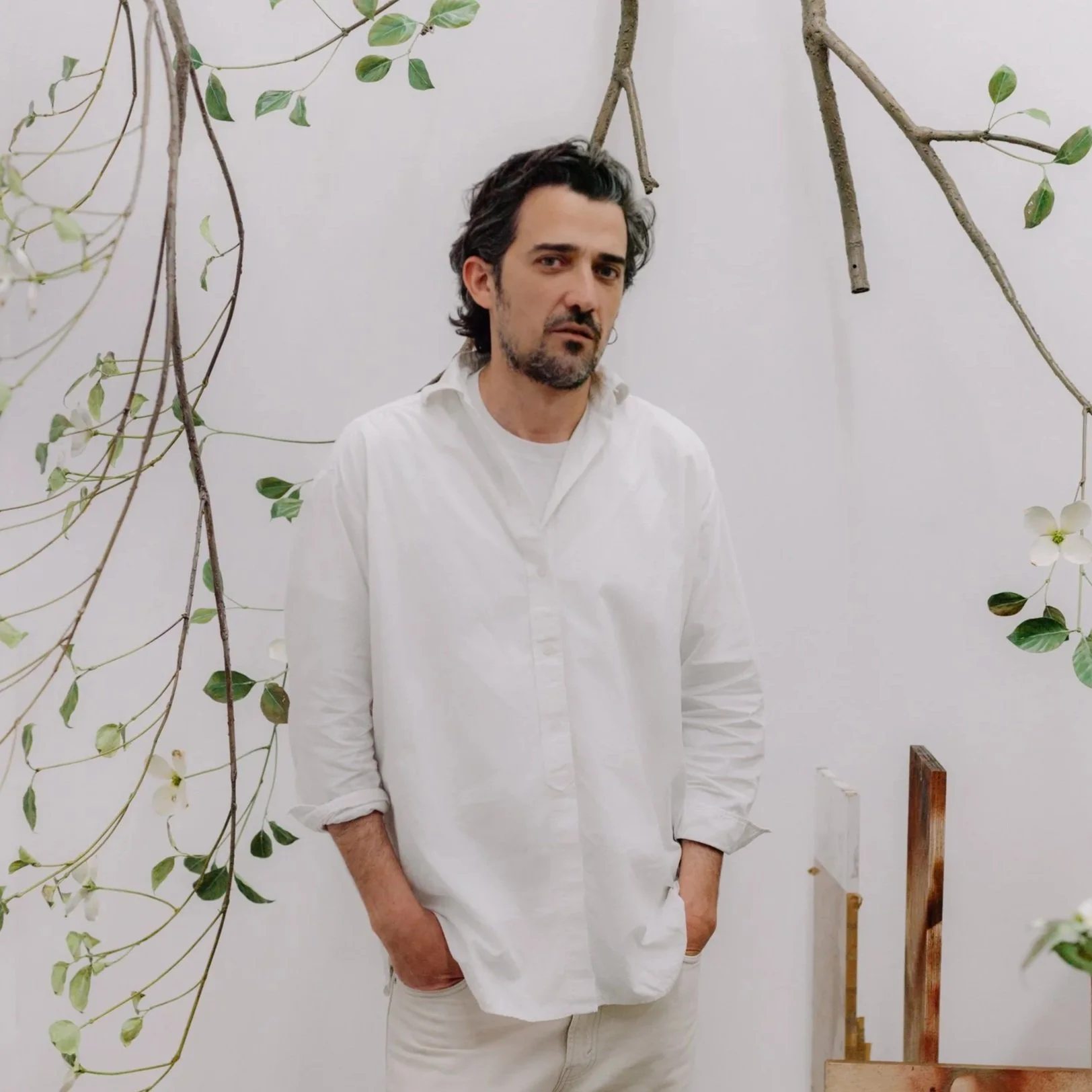
Alvaro Urbano
Álvaro Urbano’s work involves an archeology of desires and past intentions. By creating atmospheres that replicate specific spaces and architectural gestures, the artist explores the narratives that are embedded in these built bodies. Urbano borrows strategies from theater and filmmaking–such as lighting, sound and costumes–in order to explore new formats of immersiveness, his projects are often structured as scenes or sequenced chapters. The interweaving of different media is used to generate situations that approach liminal and oniric dimensions transforming the exhibition space into a vessel of phantasms and apparitions. Álvaro Urbano lives and works between Berlin and Paris.