
Alumni
Filter by Discipline
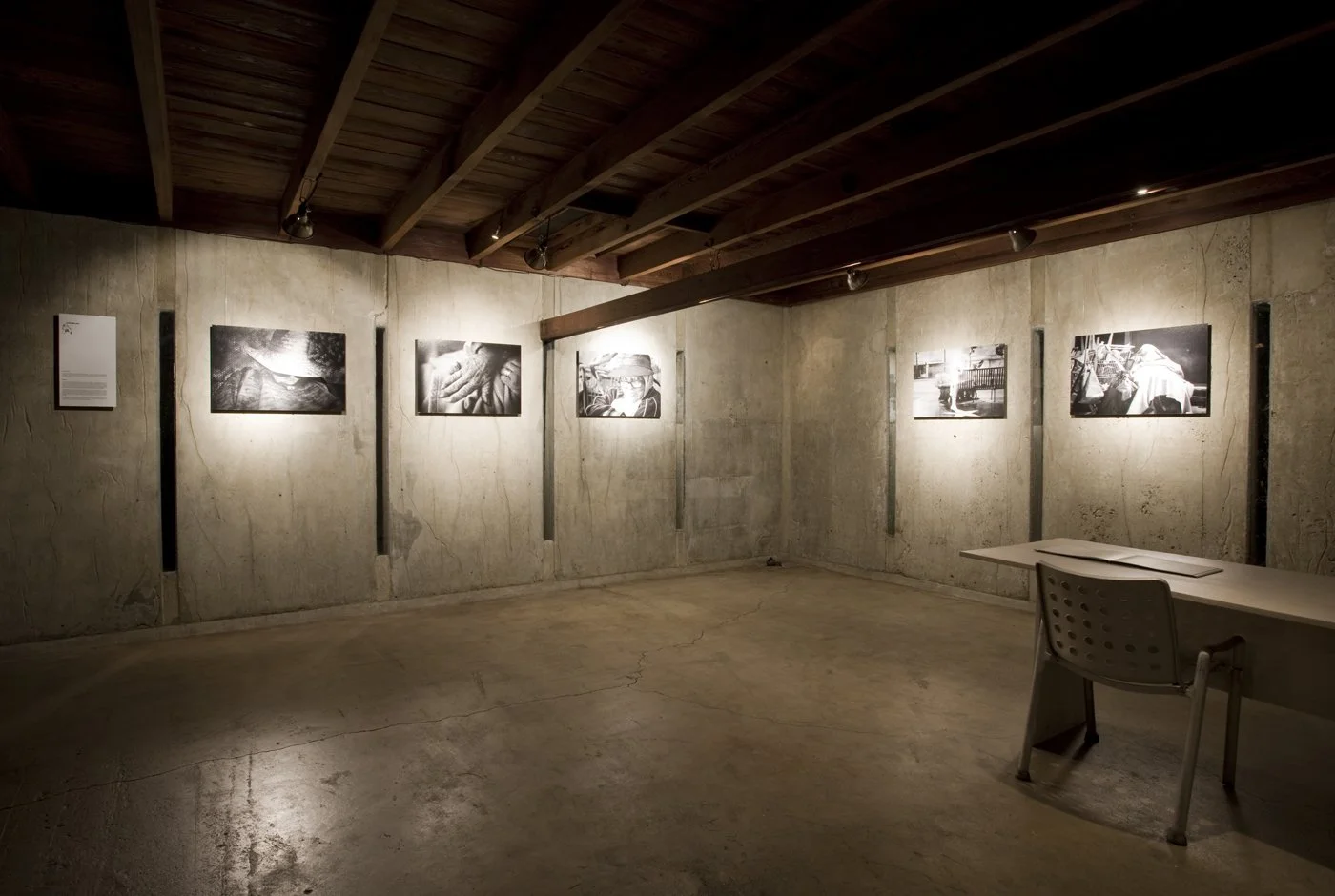
Bernhard Wolf
Bernhard Wolf was born in 1965 and lives in Graz. He studied at the Free Academy in Moscow and is a member of FOND/Graz. From 2007 to 2010, he was director of Forum Stadtpark in Graz together with Carola Peschl. His work has been presented at venues including Kunsthaus Graz, Museum Moderner Kunst Kärnten, NCCA Moscow, Mystetskyi Arsenal Kyiv, and in public commissions across Austria.

Stefan Rutzinger
Stefan Rutzinger is professor for structure and design and head of i.sd at the Faculty of Architecture, University of Innsbruck. Since 2023 he is also head of the Department of Design. He is a principal investigator in the Special Research Project „Advanced Computational Design“ and co-project leader of the SFB subproject“Computational Immediacy“. Prior to his appointment at UIBK he was an interim professor at the Academy of Fine Arts in Munich and a guest professor at the Academy of Fine Arts in Vienna. He taught at the TU Vienna and the Bartlett School of Architecture, UCL London where he led MArch Unit 15 together with Kristina Schinegger. Stefan Rutzinger is an architect, civil engineer and member of the Austrian chamber of architects. He is co-founder of soma architecture. The office has received numerous prizes in international competitions and has been shown in renowned exhibitions such as the such as the Venice Architecture Biennale 2010, Archilab 2013 „Naturalising Architecture“ or the TAB Tallinn Architecture Biennial 2019. soma has carried out international architecture projects, such as the Theme Pavilion for the EXPO 2012 in South-Korea and was commissioned to various design installations in art contexts, such as the MAK Museum of Applied Arts in Vienna, the Museum Belvedere Vienna or the MAK Center in Los Angeles. Stefan Rutzinger received several prizes and awards e.g. the Recognition Award for Experimental Architecture and the TISCHE Grant by the Austrian Federal Ministry of Arts and Culture, or the MAK Schindler Scholarship. He studied architecture at the University of Applied Arts Vienna (Studio Prix) and the Bartlett School of Architecture in London.
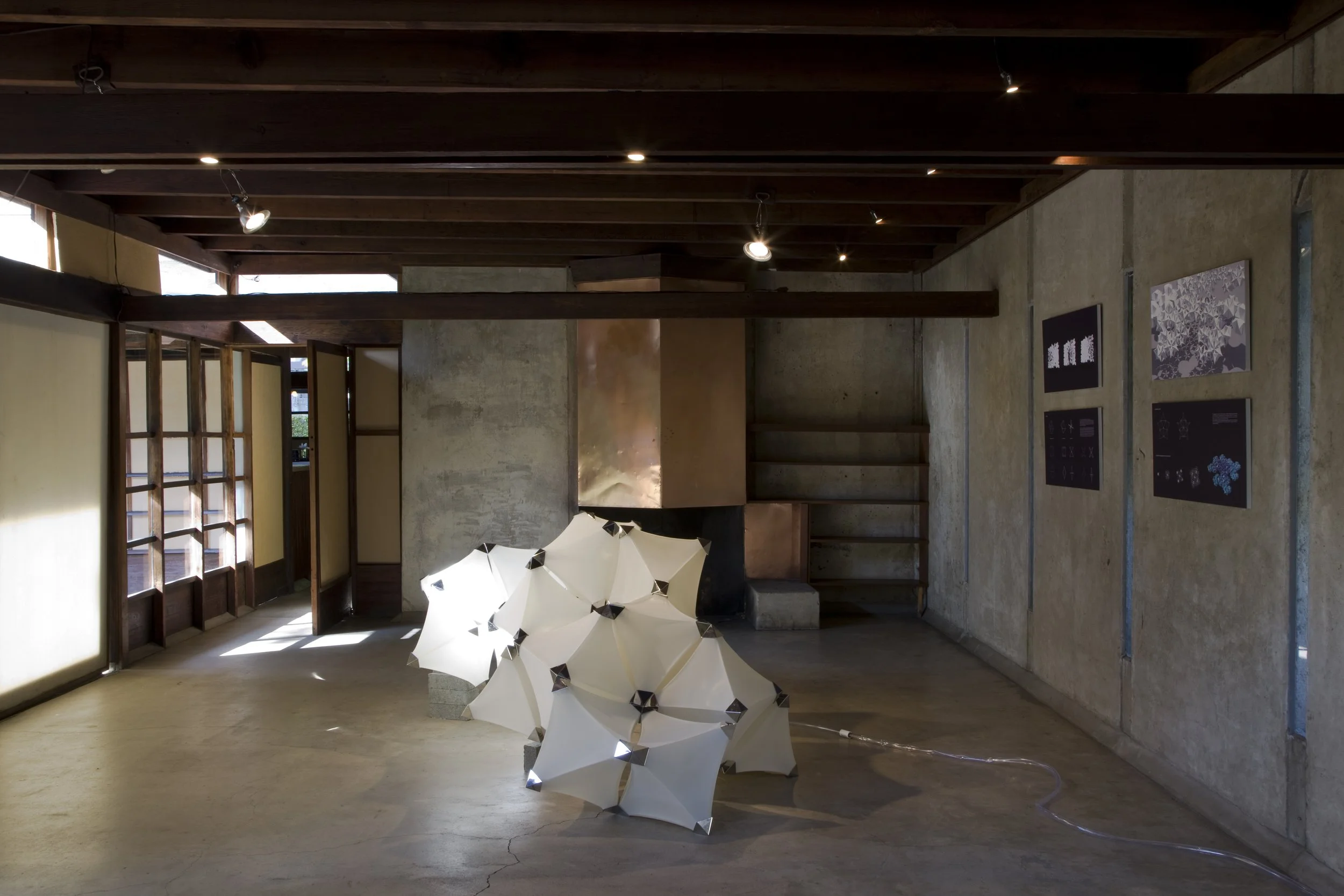
Kristina Schinegger
Kristina Schinegger is Professor for Structure and Design and Co-Head of the research group i.sd at the Faculty of Architecture, University of Innsbruck. She is a principal investigator in the Special Research Project Advanced Computational Design and co-project leader of the SFB subproject Computational Immediacy. From 2016 to 2022, she served as Dean of Studies at the Faculty of Architecture and, until 2022, as Scientific Director of the advanced studies program Designing Future Realities at the University of Innsbruck and Werkstätte Wattens.

Paul Peyrer-Heimstätt
Paul Peyrer-Heimstätt, born in 1978 in Salzburg, lives in Vienna. He studied architecture at the University of Applied Arts in Vienna.

Oona Peyrer-Heimstätt
Oona Peyrer-Heimstätt, born in 1980 in Salzburg, Austria, lives in Vienna. She studied Free, Applied, and Artistic Creation and Art and Communicative Praxis at the University of Applied Arts, as well as Philosophy and Psychology at the University of Vienna.
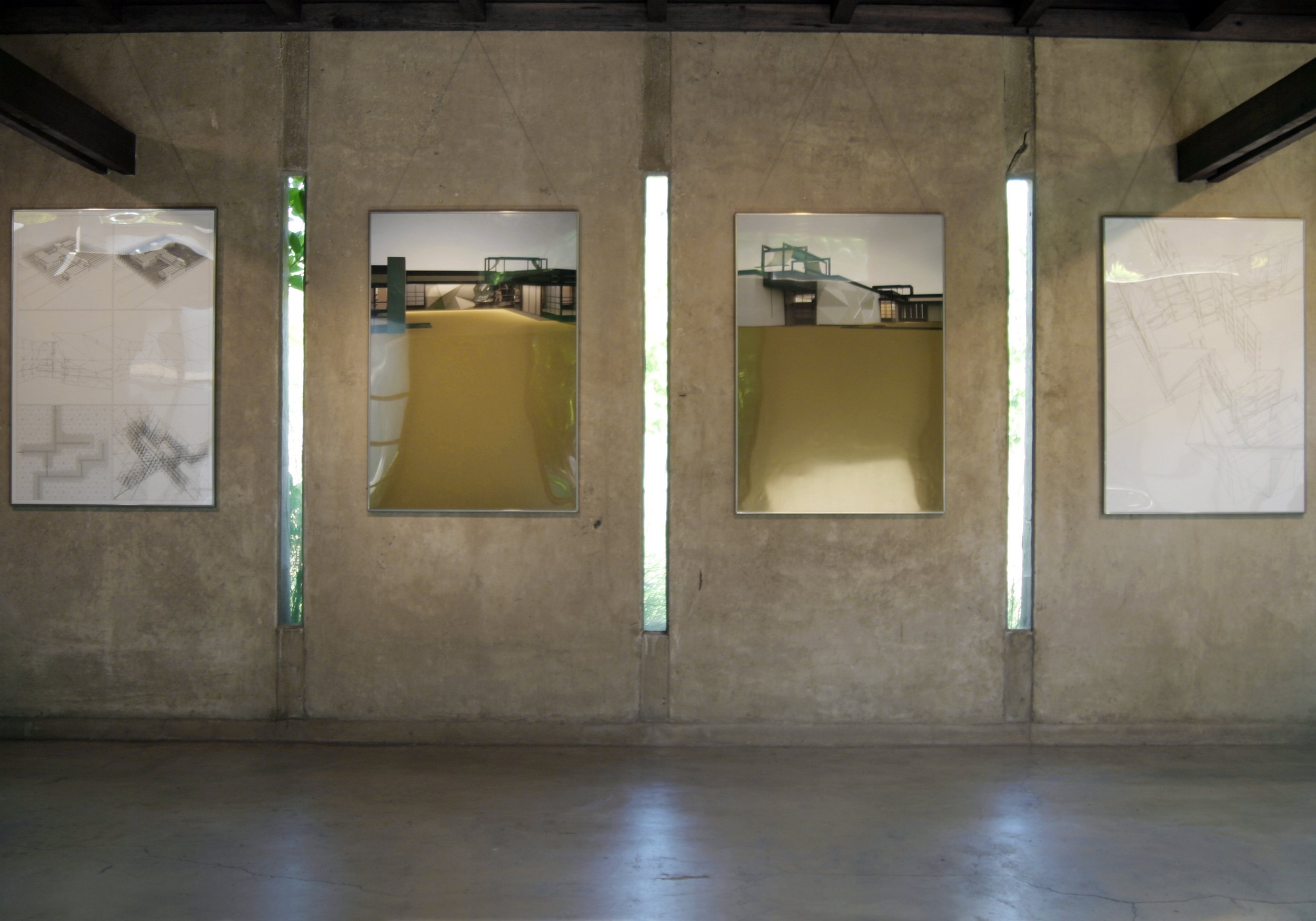
Eldine Heep
Eldine Heep is an architect and educator based in Vienna, Austria. In 2015, she founded an interdisciplinary spatial design practice, focused on delivering customised architectural and creative solutions. Her interest in the broader intersections of art and design, as well as the possibilities of working at a more intimate scale, have shaped her approach to space making. She frequently collaborates with artists, curators, and designers to realise a wide range of projects, from architecture and interiors, to social and exhibition design.
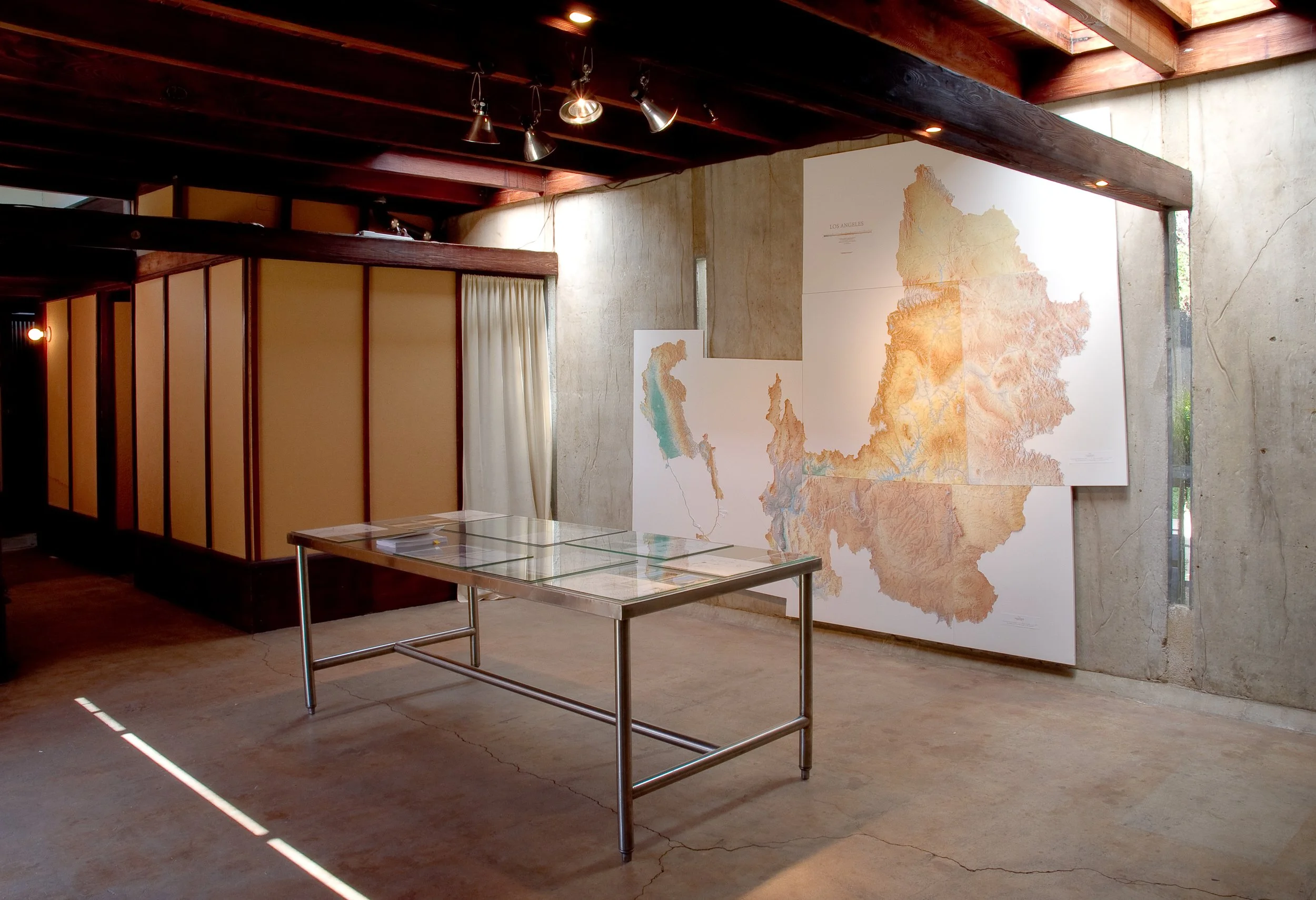
Andreas Quednau
Andreas Quednau is a German architect, educator, and founding partner of SMAQ, a studio for architecture, urbanism, and research based in Berlin, which he co-directs with Sabine Müller.
SMAQ is a collaborative studio that operates in the field of architecture, urbanism and research. SMAQ was founded by the architects Sabine Müller and Andreas Quednau and is based in Berlin and Rotterdam. Both partners hold a Master’s Degree from Columbia
Sabine Müller
Sabine Müller is a founding partner of SMAQ, a studio for architecture, urbanism, and research based in Berlin, which she co-directs with Andreas Quednau.
SMAQ is a collaborative studio that operates in the field of architecture, urbanism and research.
Theresa Krenn
Theresa Krenn studied Architecture at the TU Wien and the Academy of Fine Arts Vienna between 1999 and 2005 (Diploma: Studio Eyal Weizman). She was a founding member of the architecture firm studio uek and currently works at the architecture firm studio ederkrenn in Vienna. Her team projects have won numerous awards: her winning entry for the architectural design competition Europan 9, Oase 22 [Oasis 22], was realized in 2013, and in 2015, was both nominated for the Mies van der Rohe Award and won the Bauwelt Award „First Works“. The residential construction project Kohlenrutsche [Coal chutes], on the site of the Viennese Nordbahnhof [Northern Train Station], is a communal living project conceived in dialogue with residents and completed in 2019. Together with Benni Eder, Krenn received numerous scholarships and grants, such as the Artists and Architects in Residence Program scholarship of the MAK Center in Los Angeles in 2007, the Margarete Schütte-Lihotzky Scholarship in 2007 and, together with Lorenzo De Chiffre and Benni Eder, the Hans Hollein Scholarship in 2019. Between 2010 and 2014, Theresa Krenn taught Urban Design at the TU Wien, and she has worked as a University Assistant in the Research Unit Building Construction and Design there since 2014.
Bernhard Eder
Between 1996 and 2004, Bernhard Eder studied at the TU Innsbruck, the Academy of Fine Arts Vienna under Prof. Nasrine Seraji, and the PUC Santiago de Chile. From 2009 to 2019, he worked as an assistant in the Research Department of Urban Planning and Design at the TU Vienna. Since 2019, he has held various teaching positions at the Institute of Urban Planning at the TU Vienna.
Christina Linortner
Christina Linortner is an architect and university lecturer based in Vienna and Graz. She studied at the TU Vienna, the Tu Delft and Research Architecture at Goldsmiths College, London. She is currently working on her PhD focusing on architecture and learning in non-institutional contexts. Since 2014 she has been serving as a board member at the Austrian Society for Architecture. Together with Petra Petersson she co-edited the most recent Graz Architecture Magazine's issue: Beyond the institution. Transforming the Learning Environment in Architectural Education.
Anke Freimund
Anke Freimund, born in 1970 in Steyr, Austria, lives in Vienna. She received an education as a handicraft painter and restorer before beginning her studies in architecture at the Technical University of Vienna in 1991. From 1991 to 1997, she worked in various architectural studios in Vienna and was a member of the Students Department from 1995 to 1997. In 2005, she received her diploma from the Department for Art and Design at the Technical University of Vienna. Since 2006, she has worked at the studio of Roger Karré in Vienna.
Alexander Dworschak
Alexander Dworschak, born in 1968 in Baden, Austria, lives in Vienna. He received an education as a handicraft painter and restorer and began working at Oskar Putz Farbkonzepte in 1990. In 1991, he began studying architecture at the Technical University of Vienna. From 1991 to 1997, he worked in various architectural studios in Vienna and was a member of the Students Department from 1995 to 1997.

Sandra Manninger
Dr. Sandra Manninger is an architect, researcher, and educator. Born and educated in Austria, she co-founded SPAN Architecture with Matias del Campo in 2003. Her award-winning projects have been published and exhibited internationally, including at La Biennale di Venezia, MAK, and Autodesk Pier 1, and have been included in the permanent collections of the FRAC, Pinakothek der Moderne Munich, and the Albertina in Vienna. Sandra Manninger has taught internationally at the TU Vienna, University for Applied Arts, DIA Bauhaus in Dessau, UPenn, Tongji and Tsinghua Universities, the University of Michigan, and the Royal Melbourne Institute of Architecture. Currently, she serves as Associate Professor at the architecture department of NYIT.

Matias del Campo
Matias del Campo is an architect, designer, and theorist, currently serving as director of the MS ACT program (Architecture, Computational Technology) and as associate professor at New York Institute of Technology. He co-founded SPAN in Vienna in 2003 with Sandra Manninger, establishing a practice renowned for its integration of contemporary technologies in architectural production. SPAN's award-winning designs are shaped by the intersection of computational methodologies and philosophical interrogations, a conceptual framework they describe as "design ecology." del Campo's innovative contributions have been recognized through prestigious awards, including the Accelerate@CERN fellowship and the AIA Studio Prize. His pioneering work in the use of Artificial Intelligence (AI) in architecture design has yielded multiple accolades, including the ACADIA Innovative Research Award of Excellence. His work is part of the permanent collections of notable institutions such as the FRAC Orleans, the MAK in Vienna, the Luciano Benetton Collection in Treviso, the Pinakothek Munich, the Albertina, and multiple private collections. He has authored several books on AI and architecture such as "Neural Architecture" (ORO), "Diffusions" (Wiley), "Machine Hallucinations" (Wiley) and "Artificial Intelligence and Architecture" (Wiley).
Wulf Walter Boettger
Wulf Walter Böttger (Dipl. Ing. Architektur) holds the position of Visiting-Professor in Architecture at the Universität der Künste Berlin (UdK) teaching the collaborative Master's program at the department of architecture at the Chinese German Academy of Arts (CDK) in Hangzhou, China. He also teaches interdisciplinary architecture and fine arts classes in the Studium Generale section of UdK Berlin. He has given lectures at the University of California Los Angeles and Universität für angewandte Kunst in Vienna. Before establishing his own architecture practice in Berlin he worked for internationally renowned architects such as Peter Eisenman in New York and Jun Aoki in Tokyo. With his research project on the relationship between architecture and the human body he received the Rudolph M. Schindler research and residency award from the MAK center for art and architecture in Los Angeles and the Museum für angewandte Kunst Wien. As a curator focused on architecture and urbanism he contributed to major exhibitions at Akademie der Künste Berlin, KW-Kunstwerke Berlin and several galleries in Berlin and LA.
Robert Huebser
Robert Huebser was born in Ingolstadt, Germany. He is an architect who studied at the Technical University of Munich and the Weißensee Academy of Art Berlin.
Benjamin Haupt
Benjamin Haupt was born in Eichstätt, Germany. He is an architect who studied at BTU Cottbus and the Weißensee Academy of Art Berlin.
David J. Emmer
David Emmer leads the design department at Sweco Architects Germany. He and his team are focusing on the development of sustainable solutions for every project and the promotion of digital design tools in the creative process.
Before joining Sweco Architects, David gained over 15 years of professional experience in Asia and the Middle East, where he oversaw the design and delivery of several award-winning projects.
Hans Schabus
From 1991–1996 Hans Schabus studied at the Academy of Fine Arts Vienna, since 2014 he is professor of sculpture and spatial design at the University of Applied Arts Vienna. Hans Schabus’ works are immediately related to a spatial thinking and experience; his sculptures and interventions often refer directly to the artist’s mental and physical surroundings, especially to his atelier and the material to be processed there. The place where art is created is investigated in terms of its analogy potential with respect to life. The works can be read as a meditation on the creative act, its aspirations, but also on the difference from everyday activity. The film works that deal with traveling, speed and non-goal-oriented movement refer to the significance of an interdisciplinary reflection for art.